newsLetterS
newsLetterS
Where the future of pathology is being built
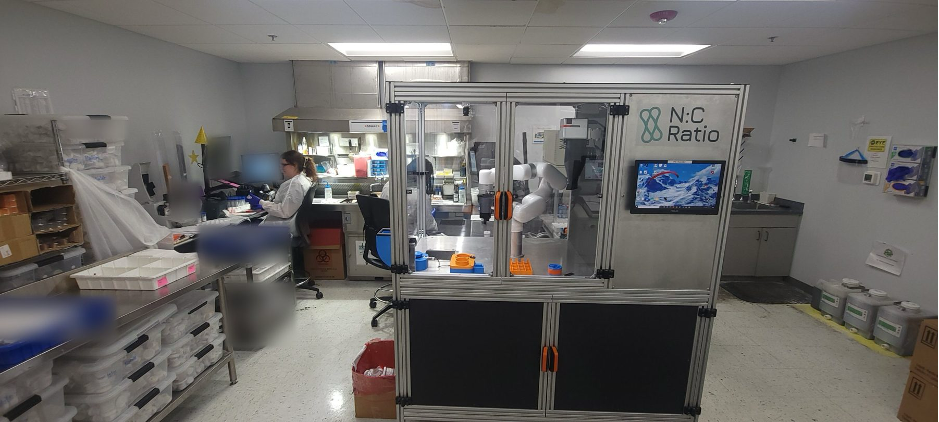
Allīne Laboratory has partnered with NCRatio to host an early pilot of the Rokitansky Grossing System, an automated approach to small biopsy grossing, right here in our lab.
The best ideas in laboratory medicine usually come from the people who do the work every day. Allīne Laboratory is putting that belief into practice by partnering with innovators to develop and test new technology, here in our own lab.
Our latest partnership is with NCRatio, Inc., a Tampa-based medical device startup. Allīne Laboratory is hosting an early pilot of NCRatio’s Rokitansky Grossing System (“Roki”), an automated instrument designed to transform small biopsy grossing.
Hundreds of tiny transfers, every single day
Small biopsy grossing is still almost entirely manual. Tiny fragments are transferred by hand from container to cassette, hundreds of times a day. Every transfer carries a risk of tissue loss or specimen mix-up.
“A lab where new ideas in pathology are developed, tested, and refined by the people who know the work best.”
Take the transfer out entirely
NCRatio’s Ranvier Collection Device lets the clinician place the biopsy directly into a cassette at the point of collection. When the specimen arrives at the lab, the Roki takes it from there.
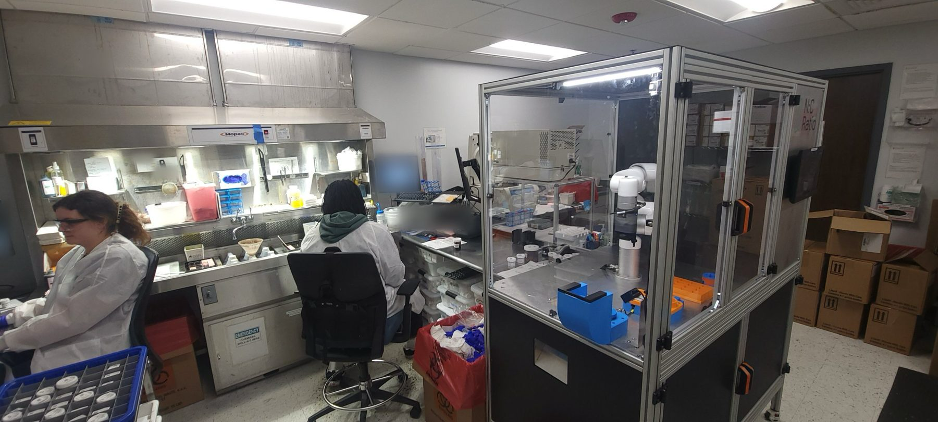
The Roki installed alongside Allīne’s grossing stations.
What the Roki is designed to do
NCRatio’s Ranvier Collection Device lets the clinician place the biopsy directly into a cassette at the point of collection. When the specimen arrives at the lab, the Roki takes it from there.
The Rokitansky Grossing System is built around a few clear goals for the lab:
- Remove the hand transfer. Because the biopsy is already in its cassette at collection, there is no manual step where a tiny fragment can be dropped, lost or placed in the wrong cassette.
- Build in identity checks. The Roki checks the patient label against the lab accession label before the container is opened, then confirms the engraved cassette matches the barcode before the cassette moves on.
- Trace every cassette from the start. Each cassette is laser-engraved at the instrument, so identification is permanent and created at the source.
- Bring consistency to gross descriptions. An image of every cassette is captured and used to draft a standardized gross description, with fragment count and size, for the pathologist to review and sign off.
- Free skilled staff for skilled work. By automating a repetitive, high-volume task, the Roki is designed to let grossing techs and Pathologist assistants spend more of their time where their expertise matters most.
- Create a digital record. Every specimen leaves behind images and a time-stamped log, supporting quality review and traceability.
At the front of the change, not behind it
Partnerships like this put Allīne Laboratory at the front of the change instead of behind it. Our team gets early hands-on experience with emerging automation and a direct voice in how it’s designed. They also get the chance to take part in research that could shape how labs everywhere handle small biopsies. For NCRatio, a real working lab is the best place to refine the technology.
A non-clinical engineering pilot
This is a non-clinical engineering pilot. It uses only mock and non-human surrogate specimens.
- No patient samples
- No connection to patient records
- No effect on clinical operations
The data gathered will help plan future clinical evaluation. This is the first of what we hope will be many collaborations that make Allīne Laboratory a home for new ideas in pathology.
A partnership built at the bench
Allīne Laboratory and NCRatio are working side by side to shape the next generation of small biopsy grossing.